
How to Learn Italian as a Beginner: Your Structured Path to Confidence
“I’ve never spoken a word of Italian in my life. Where do I even start?”
This is one of the questions I hear most often from new students. Last month, Anna from Utrecht, asked me the same thing during her trial lesson. She had tried an app for a few weeks, felt overwhelmed by random vocabulary lists, and was ready to give up before she had really begun. Three months later, she confidently introduced herself to her Italian neighbours with: “Mi chiamo Anna, sono olandese e abito qui da due anni” (My name is Anna, I’m Dutch and I’ve lived here for two years). She is not fluent yet, but she is already using Italian in real conversations, the point where most beginners would like to be after a few lessons.
As a native Italian teacher who has guided hundreds of adults through their first steps. I want to show you exactly how to learn Italian as a beginner, moving from confusion to clarity and building real communication skills. There are no shortcuts. Italian takes effort and practice, but with the right approach, the progress becomes steady and encouraging.
The Reality of Learning Italian as a Beginner
Learning Italian isn’t easy, and pretending otherwise doesn’t help anyone. Several aspects can feel challenging at the beginning:
Verb conjugations change completely depending on the subject: io parlo, tu parli, lui parla. Gender affects articles and adjectives: il ristorante italiano vs la pizza italiana. Speaking can feel intimidating: you may understand more than you can say.
What I’ve learned after teaching many beginners is that the key isn’t avoiding these challenges, but facing them in the right order. With a structured approach and guidance from a private Italian teacher, these difficulties become manageable steps.
My Approach: Building Confidence Through Structure
The difference between students who progress and those who get stuck isn’t talent. It’s clarity, consistency and a logical order.
When you learn Italian as a beginner in private lessons, I focus on three principles:
- Individual adaptation
Every student learns differently. Some pick up pronunciation easily but need help with grammar patterns. Others understand grammar quickly but lack confidence when speaking. The lessons follow your specific needs.
- Practical patterns first
Instead of explaining every exception, we work with reliable patterns and simple rules that help you communicate immediately. Grammar becomes clearer when it grows naturally from use.
- Speaking from the first lessons
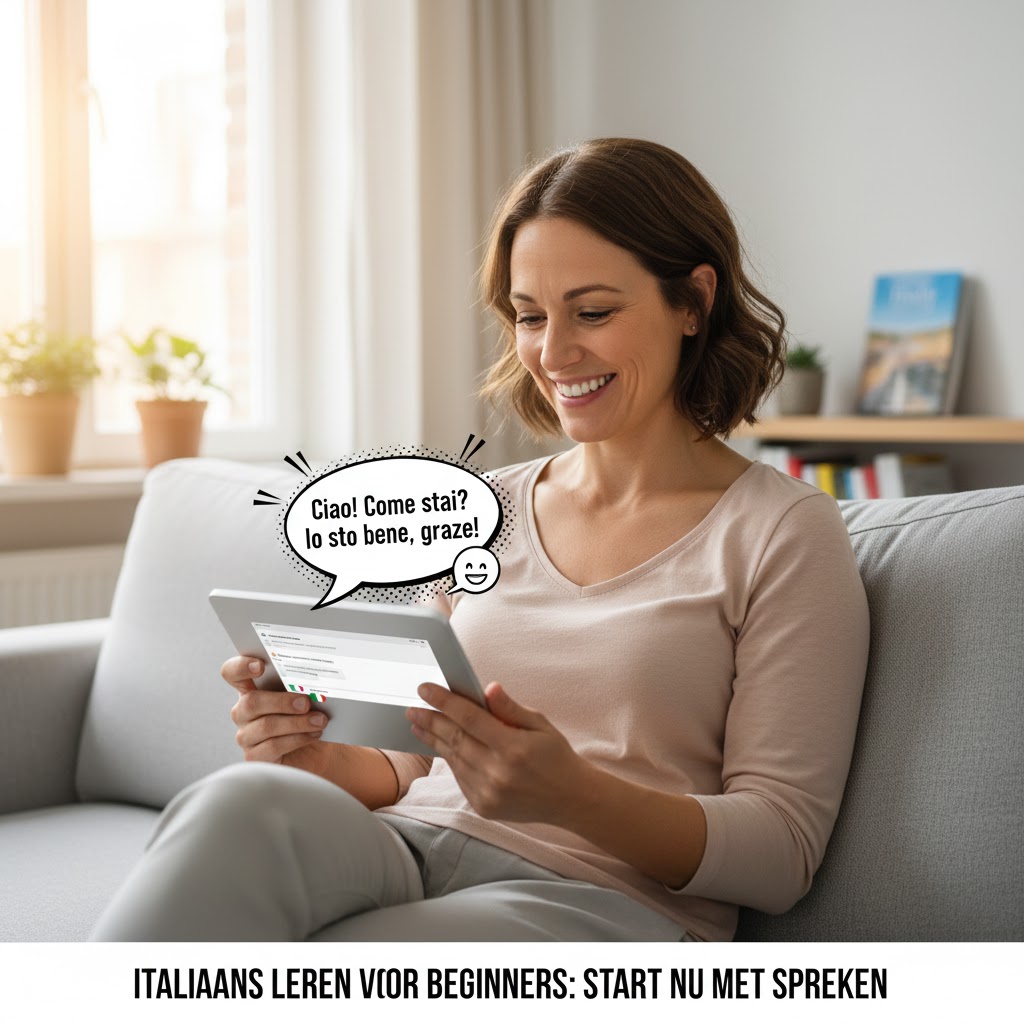
We don’t wait weeks before starting to speak. By lesson three, you’re already forming simple sentences and introducing yourself.
A Flexible Progression: What to Expect in an Italian Beginner Course
There’s no rigid schedule because learning doesn’t work that way. What I can tell you about is the logical progression we follow to give you a solid foundation.
Building Your Foundation (Early Lessons)
We always start with pronunciation. Getting Italian sounds right from the beginning saves you months of correcting bad habits later. This includes working on tricky letter combinations and double consonants, which can change the meaning of a word completely.
For example, ”nonna” (grandmother) versus ”nona” (ninth).
We also tackle the gender system early. Understanding that every Italian noun is either masculine or feminine is key. I’ll give you practical patterns that work most of the time:
words ending in -o are usually masculine, and words ending in -a are usually feminine. We learn these patterns to help you communicate, not to endlessly memorize exceptions.
Moving Into Sentences (Middle Lessons)
Once you’re comfortable with basic sounds and the gender system, we introduce the fundamental verbs ”essere” (to be) and ”avere” (to have). These two verbs are essential and appear in almost every conversation, such as,
”Io sono olandese e ho una casa in Italia” (I’m Dutch and I have a house in Italy).
This is where you start building your first complete sentences and learning how Italian verbs change their endings. We focus on the regular verbs that are the easiest one to learn and then the most important irregular verbs that you’ll actually use in conversation: ”parlare” (to speak), ”mangiare” (to eat), ”abitare” (to live), and ”lavorare” (to work).
Developing Real Communication (Later Lessons)
As your foundation gets stronger, we work on connecting words and forming questions, the tools that transform basic sentences into actual conversations. You’ll learn to ask things like:
”Dove abiti?” (Where do you live?), ”Perché studi italiano?” (Why do you study Italian?), and ”Quando sei arrivato in Italia?” (When did you arrive in Italy?).
This is also where we introduce the past tense so you can share experiences, like ”Ieri ho mangiato in un ristorante italiano” (Yesterday I ate in an Italian restaurant). This is a vital step in an Italian beginner course.
What You Can Realistically Expect
After 10 lessons following this progression, you will have a solid foundation in pronunciation and an understanding of how the language works. While constructing longer sentences will still require effort, you’ll no longer be intimidated by speaking Italian. Most importantly, you’ll have the confidence to believe you can actually learn this language.
Why This Method Works Better Than Self-Study
The biggest difference between our private Italian course and trying to learn on your own isn’t just the personalised attention, though that matters enormously. It’s having someone who can simplify what seems impossibly complex.
When you encounter ”Mangio la pizza” (I eat the pizza) but ”Bevo il vino” (I drink the wine), an app might just tell you that pizza is feminine and wine is masculine. I’ll explain the pattern, offer memory tricks, and immediately practice with examples that are relevant to you, such as ”Prendo un espresso” (I’ll have an espresso) or ”Ordino la pasta alla carbonara” (I’ll order carbonara pasta).
Our private Italian courses are flexible, allowing us to spend extra time on whatever challenges you most. If verb conjugations click quickly but pronunciation needs work, we adjust. If you love grammar but need confidence for speaking, we focus on conversation practice.
Your Part in This Process
These lessons are intense, even though they’re enjoyable. I provide customized PDFs with exercises that reinforce what we practice in lessons. While you’re free to skip the homework, students who spend a minimum of 15-20 minutes between lessons reviewing and practicing see much steadier progress. This isn’t about hours of tedious study, it’s about regular reinforcement.
Ready to Start Speaking Italian?
Learning Italian as a total beginner means accepting that it will challenge you, but also trusting that with proper guidance, you can overcome every obstacle. The students who succeed aren’t necessarily the most naturally gifted. They’re the ones who stay motivated and committed to the process.
If you’re ready to stop feeling overwhelmed by where to start and want someone to guide you through each step logically and clearly, private Italian lessons with a native Italian teacher can transform your learning experience. You’ll have someone who understands exactly where beginners struggle and knows how to help you work through each challenge systematically.
Most importantly, you’ll start speaking Italian confidently much sooner than you think possible, because you’ll have the right support and structure to make consistent progress.
👉 Book your free trial lesson and start learning Italian your way.